Leveling the playing field: Lifetimes of North American sports stadiums
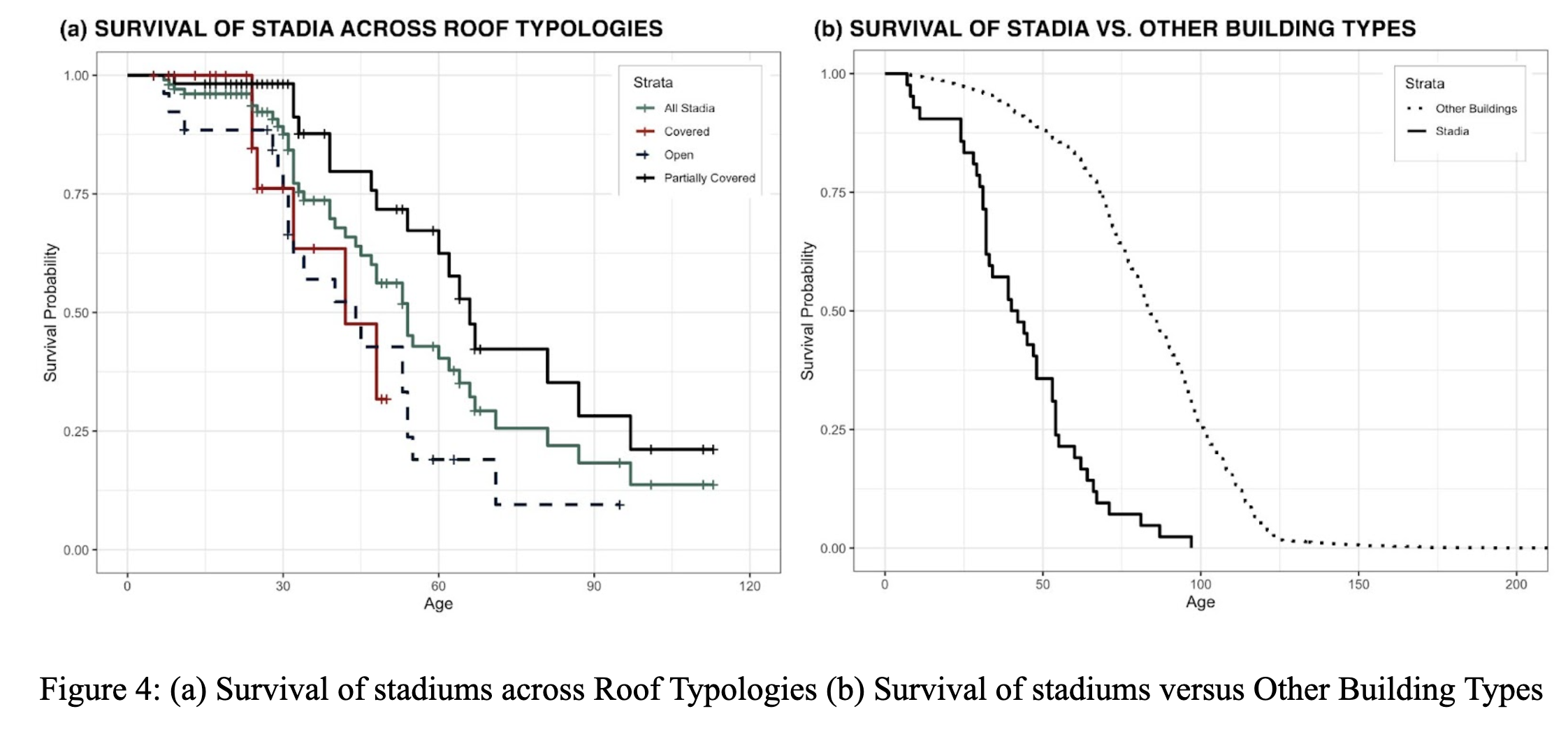
The Kingdome in Seattle was demolished after only 26 years, which epitomizes the short lifespans plaguing North American stadiums since the post-war era. Despite much longer design lifetimes, a survey of demolished stadiums reveals an average lifespan of just 40 years, a startlingly brief tenure for buildings of their scale and significance. Short building lifetimes have significant impacts, since construction and demolition waste contribute to a significant portion of global process-related greenhouse gas (GHG) emissions in the built environment. Demolition prior to the end of a structure's technical lifetime can cause higher embodied impacts. This paper underscores the obsolescence of this spatial structural typology by first creating a dataset of 106 stadiums (and 42 demolished stadiums) in North America, followed by conducting a survival analysis of these structures across typological attributes. Lastly, the paper examines the reason for stadium demolition in order to encourage the reconsideration of current demolition practices.
M. Wang-Xu, J. Berglund-Brown, B. Clifford, J. Ochsendorf. Leveling the playing field: Lifetimes of North American sports stadiums. Proceedings of IASS Annual Symposia, Volume 2025, International Association for Shell and Spatial Structures (IASS).
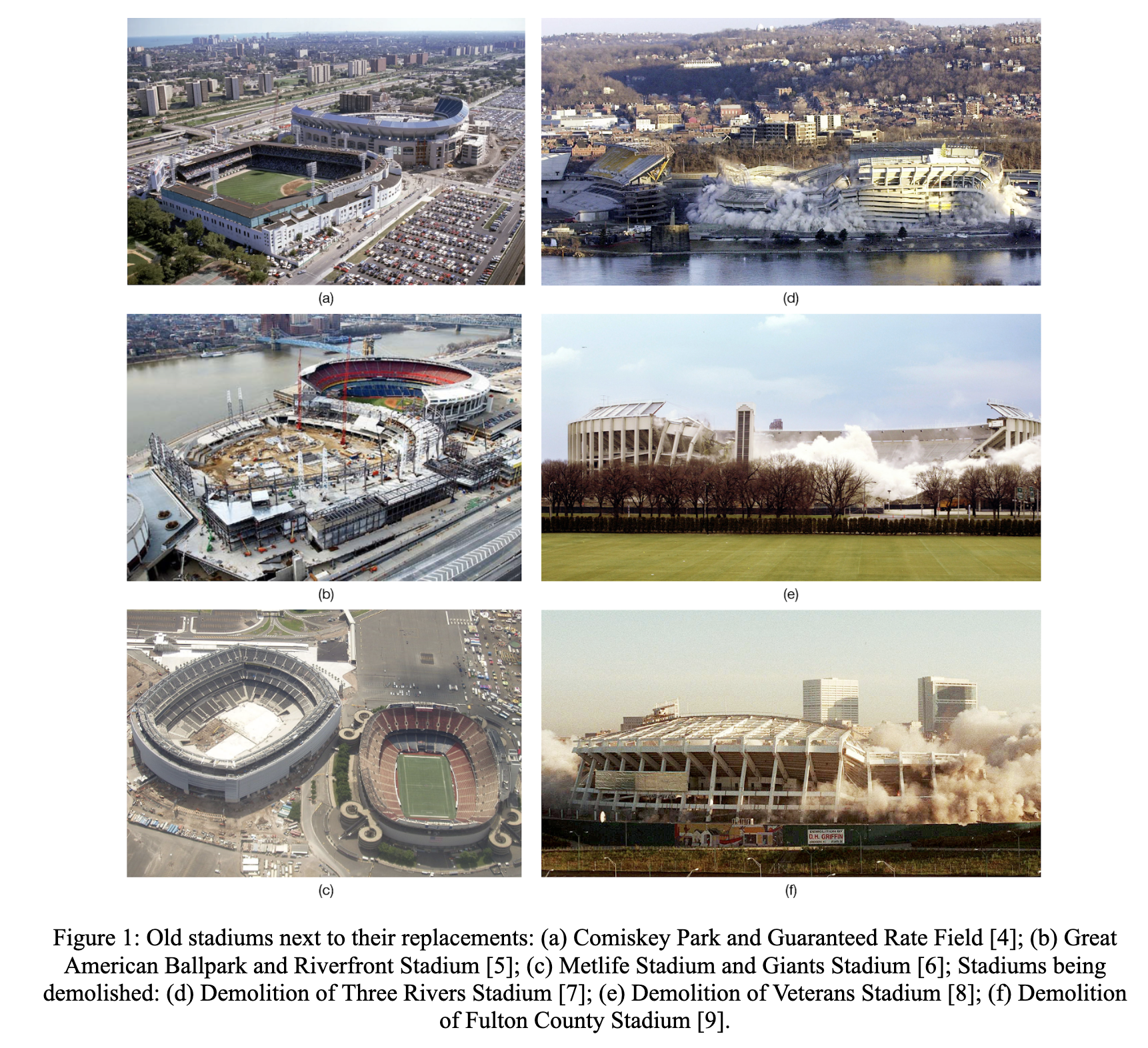
While the phenomenon of stadium demolition has been documented in select news publications, no recent papers have sought to holistically examine the demolition of stadiums. This paper aims to characterize the existing landscape of stadium demolition by (1) estimating the average lifetime of this structure type; (2) understanding how the survival of stadiums varies across forms and building types; and (3) examining the reasons behind it.