STEELE
What if the most sustainable materials have been in our buildings all along? Reusing structural steel elements allows us to reduce emissions while still meeting building demands. Our work at MIT explores the potential of reused heavy-section steel by estimating carbon and cost savings and analyzing end-of-life material flows of steel structures in order to encourage widespread adoption.
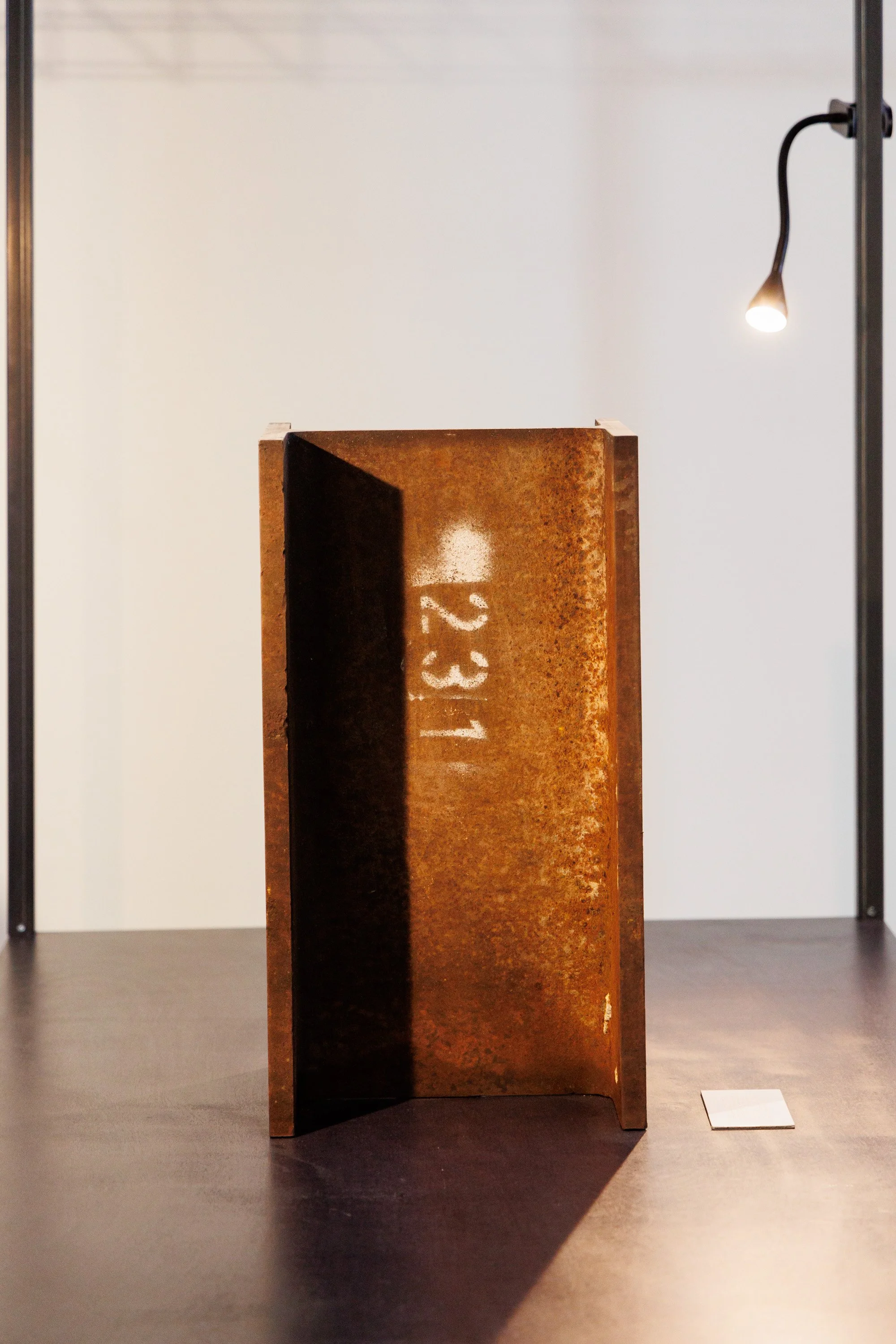
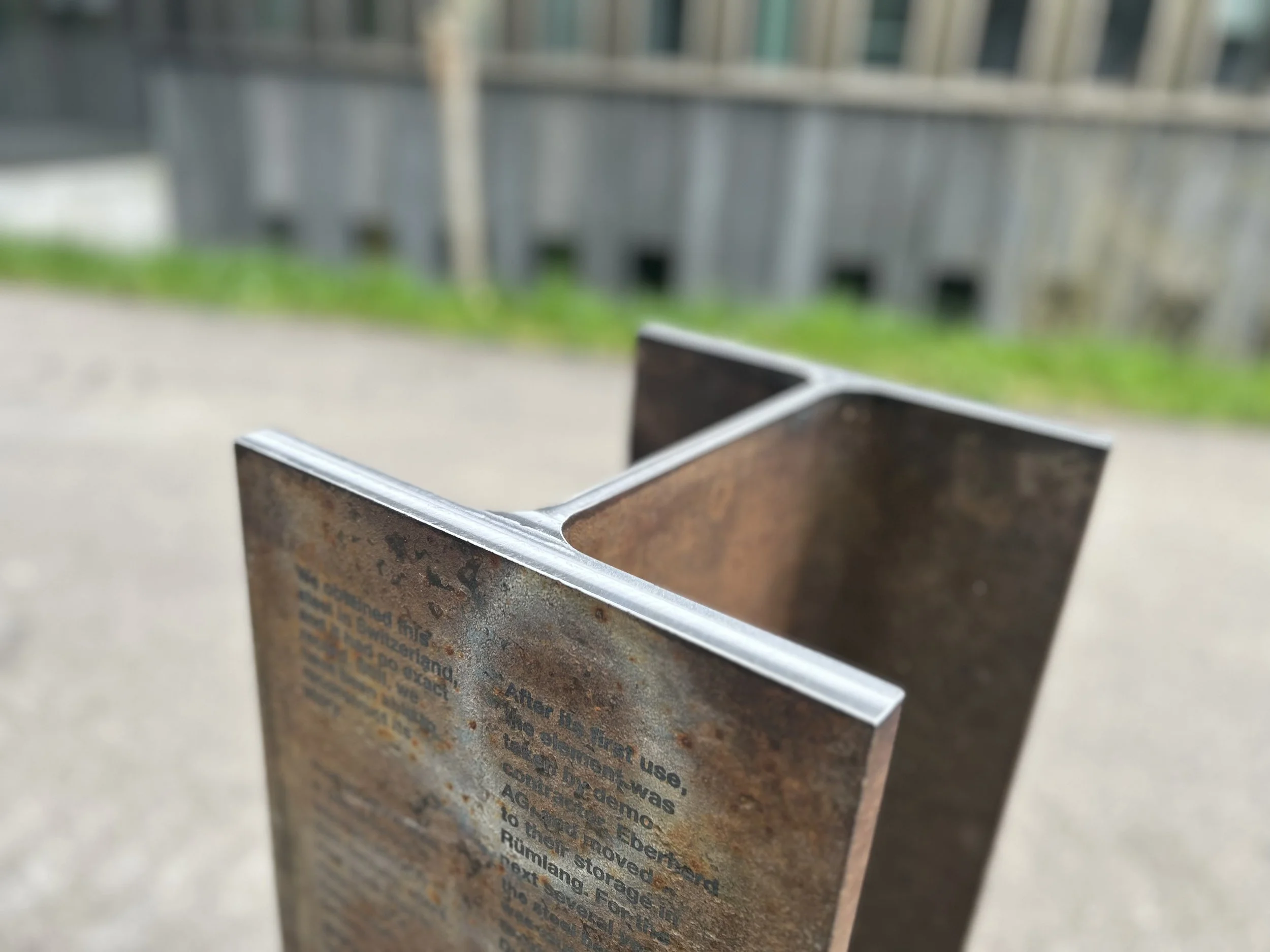
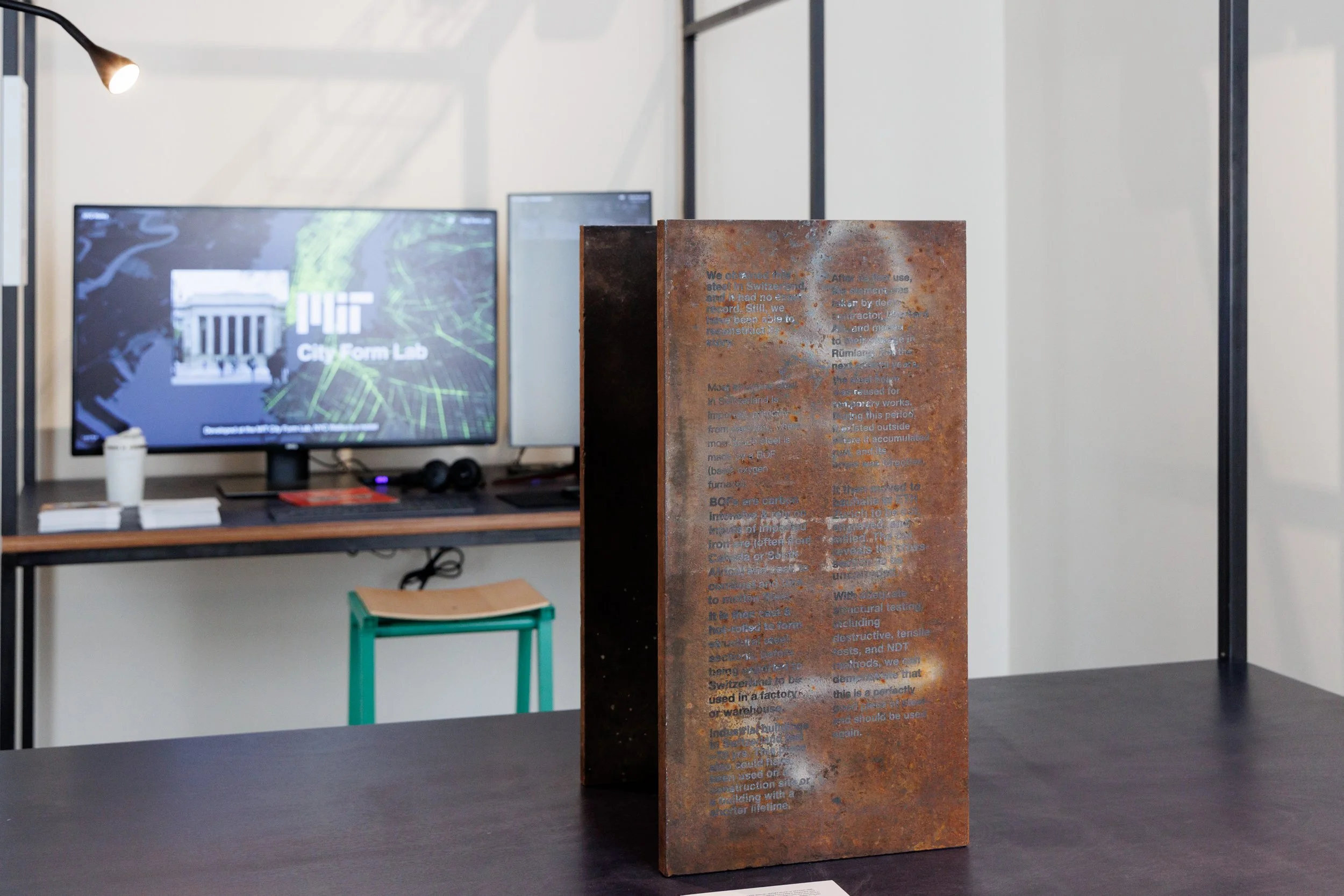
In our current end-of-life steel supply chain, elements are cut up and melted without considering the material’s value. This steel stele gives physical expression to the potential impact of reuse, and is proof that structural steel elements are valuable long after they have been deemed ‘scrap’. The object chronicles its own monetary, structural, environmental, and societal importance, declaring: this is a perfectly good piece of steel.
The work is part of an exhibit in a collateral event of the 2025 Venice Architectural Biennale called "The Next Earth: Computation, Crisis, Cosmology."
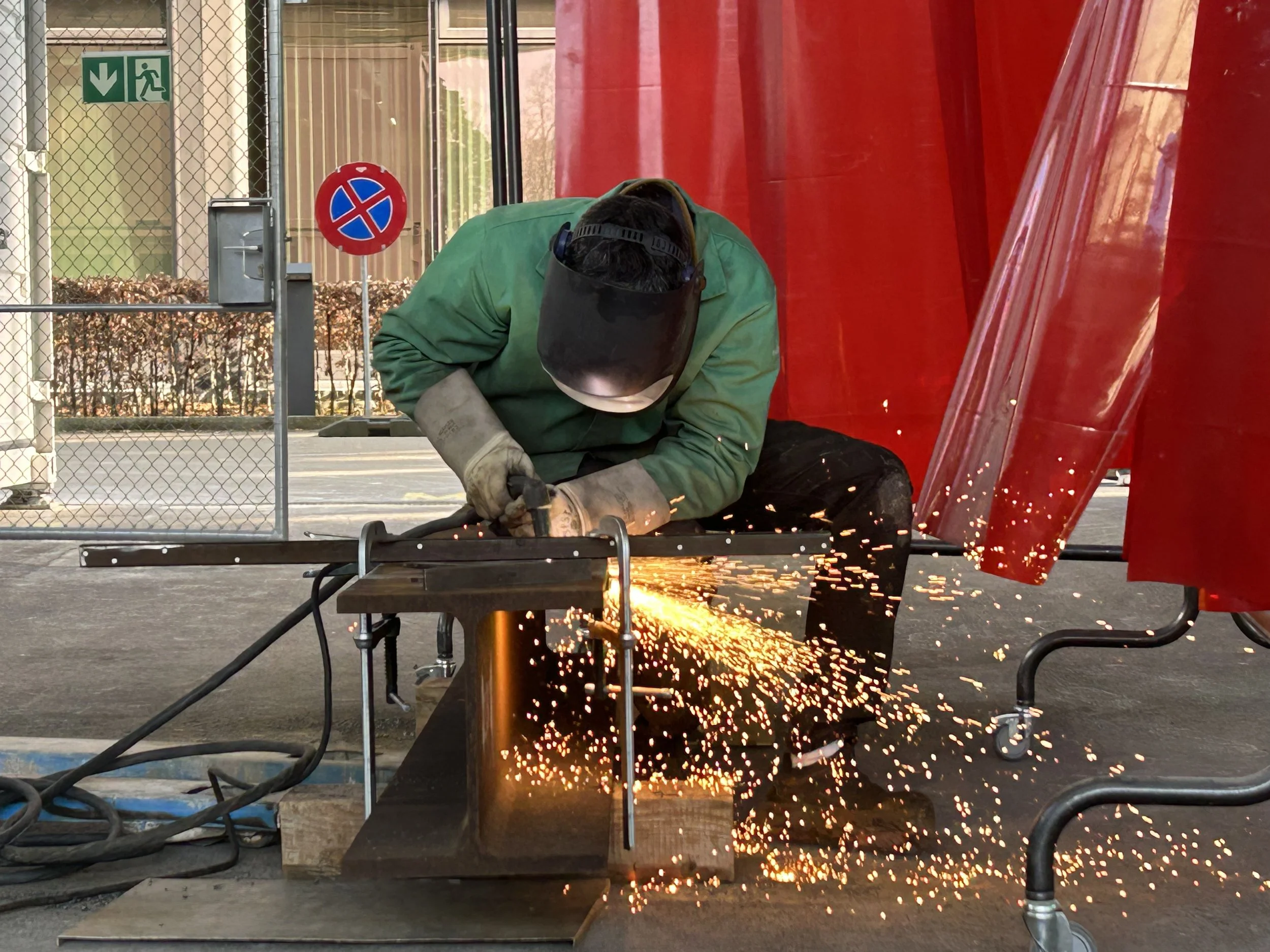
In collaboration with John Ochsendorf and fabrication assistance from Zain Karsan.
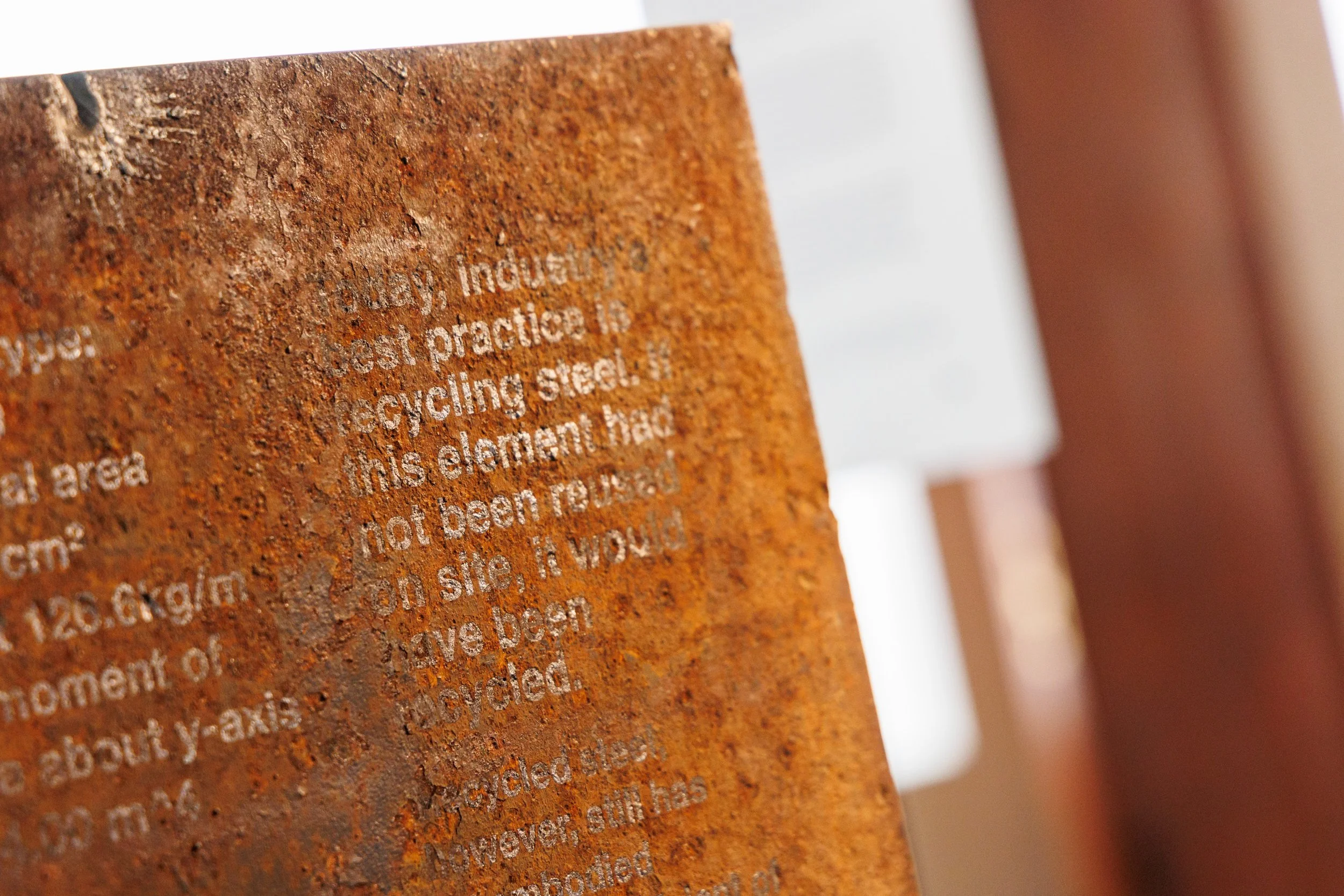
A stele/stela, in the ancient world, was an upright stone or wooden slab, with an inscription or design, communicating a boundary, waypoint, law or decree, commemoration, or sacred marker. Stelae have served as rich sources of information about that time period, and famous stelae include the Rosetta Stone, and the Code of Hammurabi. In a modern context, the most prominent construction materials in urban environments are primarily steel and concrete, as opposed to stone and wood. We don’t often acknowledge or document the information and impact end-of-life steel elements contain. This steel stele captures that story.